Keep your GLP-1patients on therapy.
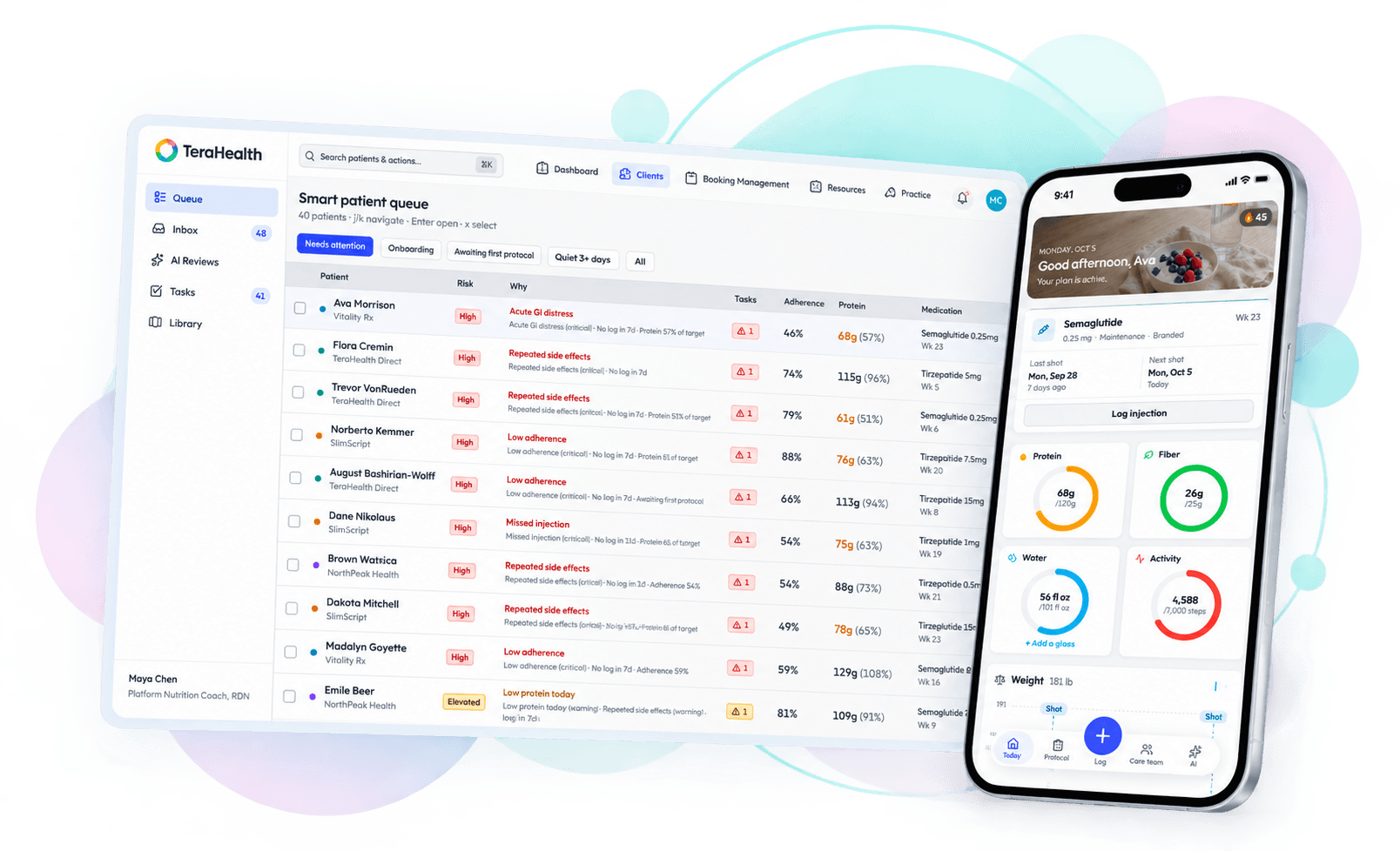
TeraHealth coaches away the side effects that make patients quit their GLP-1 medication — nutrition, fitness, sleep, and the rest of a lifestyle-medicine plan, delivered daily inside your app and signed off by a practitioner.
32M
US adults currently on a GLP-1, up from ~10M in 2025
54%
have quit within 12 months of starting
$132B
global GLP-1 sales in 2025, heading to $190–200B by 2030–35
More than half of patients quit before the drug can work.
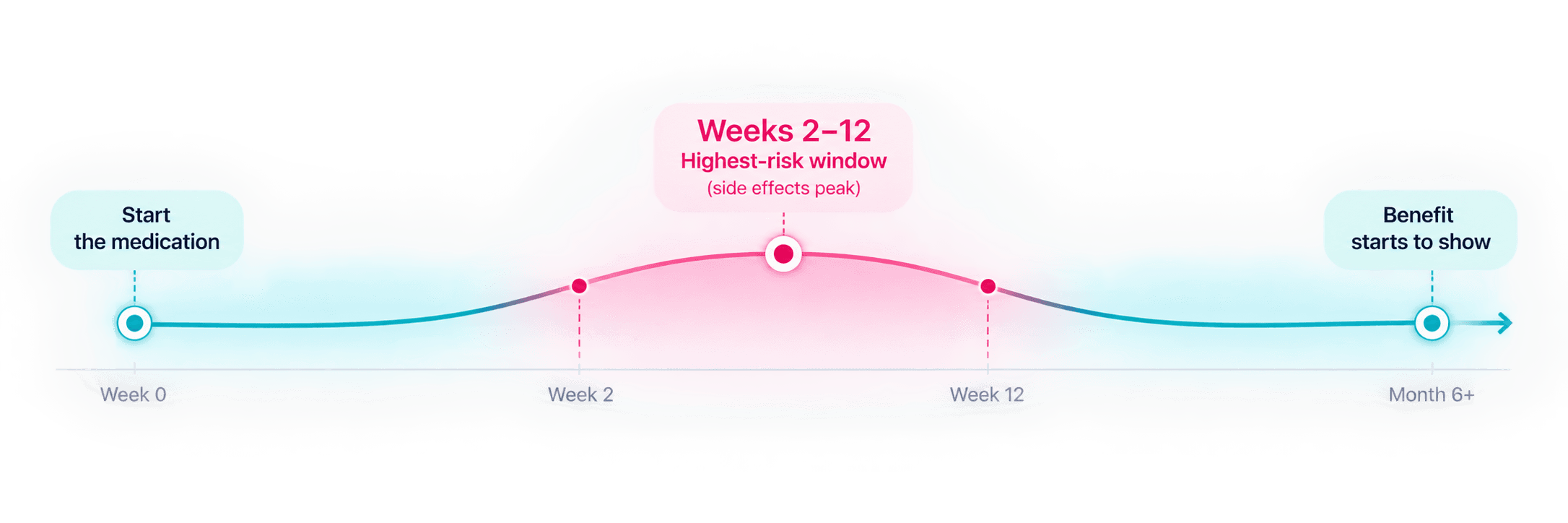
Nearly every GLP-1 side effect traces back to one mechanism: the drug slows the stomach and cuts food intake. That makes the side effects predictable — and coachable. The patient who quits at month three is usually not quitting because the drug failed.
54%
discontinue within a year
n = 125,474
8%
are still on therapy at three years
Weeks 2–12
is when side effects peak and most patients quit
Why patients quit, and the lifestyle answer
Each side effect has a known cause and a known fix. Our protocols pair the two, written for the specific drug and dose the patient is on.
Side effect
Why it happens
Lifestyle answer
Nausea, reflux
Drug slows stomach emptying
Smaller, lower-fat meals timed around dose
Constipation
Reduced gut motility
Fiber and fluids increased gradually
Muscle loss
Rapid weight loss without resistance training
Protein at 1.2–2.0 g/kg body weight, plus resistance training twice a week — only proven way to preserve lean mass during GLP-1 weight loss
Fatigue, hair thinning
Nutrient intake drops
Nutrient-dense meals; iron, B12, and vitamin D checked and corrected
Regain after stopping
Habits never changed
Habits built during treatment, so the patient has something to fall back on
Side effect
Nausea, reflux
Why it happens
Drug slows stomach emptying
Lifestyle answer
Smaller, lower-fat meals timed around dose
Side effect
Constipation
Why it happens
Reduced gut motility
Lifestyle answer
Fiber and fluids increased gradually
Side effect
Muscle loss
Why it happens
Rapid weight loss without resistance training
Lifestyle answer
Protein at 1.2–2.0 g/kg body weight, plus resistance training twice a week — only proven way to preserve lean mass during GLP-1 weight loss
Side effect
Fatigue, hair thinning
Why it happens
Nutrient intake drops
Lifestyle answer
Nutrient-dense meals; iron, B12, and vitamin D checked and corrected
Side effect
Regain after stopping
Why it happens
Habits never changed
Lifestyle answer
Habits built during treatment, so the patient has something to fall back on
How a GLP-1 Companion works.
A GLP-1 coaching program that runs alongside the prescription, built around four ideas. Each one is covered in detail below.
Personalized to the patient GLP-1 medication and overall health condition.
Our Clinical Reasoning Engine reviews profile intake, lab tests, symptoms and session notes to identify possible conditions, so the program avoids anything contraindicated for that patient.
Six domains, not two.
Nutrition, supplements, fitness, sleep, stress and lifestyle interventions, because the often overlooked ones can decide whether the protocol works.
We supply the practitioners.
A health coach and a personal trainer approve every plan before it reaches the patient. Dosing, labs and medical risk stay with your prescriber.
Two ways to deliver it.
Managed Solution: we host and run everything under your brand.
Build It Yourself: your team runs it on our engine through our API or SDK.
We personalize the GLP-1 coaching program to the patient's conditions.
Two patients on the same drug rarely need the same plan. Before anything is recommended, the program accounts for everything else going on with that patient.
Input
Patient data
Clinical Reasoning Engine
The program accounts for the patient's possible conditions.
Our Clinical Reasoning Engine reviews the patient data available to it (intake answers, lab tests, reported symptoms and coaching session notes) and identifies possible health conditions using the rules in our clinical knowledge bases. These are not diagnoses; they are signals the coaching program takes into account across all six domains, so it doesn't recommend a food, supplement, exercise or habit that is contraindicated for that patient. As new labs, symptoms or notes come in, the program updates with them. A health coach and a personal trainer review and approve every plan before it reaches the patient, and dosing, labs and medical risk stay with the prescriber.
These are possible health conditions, not diagnoses.
Applied across all six domains
Every plan is reviewed before it reaches the patient.
GLP-1 dosing, labs and medical risk stay with the prescriber.
A patient who stays on a GLP-1 is worth $500 to $1,000 a month to the company that makes it — and $150 to $500 a month to the pharmacy that sells it.
of coached patients are still on their GLP-1 at 12 months, versus 47–49% without coaching
Published, third-party result — Omada Health, 12-month analysis, Jan 2026.
Safety and clinical governance
Every plan a patient sees was approved by a practitioner. The app coaches lifestyle; it never touches the prescription.
Practitioner-signed
A health coach and a trainer review the plan generated by the platform, make edits as they see fit and approve a final protocol.
Auditable by design
The Clinical Reasoning Engine works from a curated, cited clinical knowledge base — Health data → clinical hypotheses → personalized coaching protocols. GLP-1 protocols were built by our clinical lead (a Medical Doctor and MS in Nutrition). Reasoning is traceable at every step, and the AI only summarizes for the practitioner to decide.
Lifestyle only
The app never recommends a medication or a dose change. Anything that looks like a dose question is routed straight to the prescriber.